Wednesday, May 30, 2012

Meeting People: Marc Antony

Hello fellow people (and aliens too, why not?), it's Adele! I just came back from Ancient Rome where I met with Roman politician and general Mark Antony. He told me all about what life was like in ancient Rome. Marcus Antonius (Mark Antony) was born on January 14, 83 B.C., in Rome. His mother was Julia Antonia, and his father was also named Marcus Antonius. Mark Antony had two brothers named Lucius Antonius and Gaius Antonius. Mark Antony had four (well, five if you count Cleopatra) wives. They were named Fadia, Antonia, Fulvia, and Octavia. Mark Antony also had seven children! They were named Cleopatra Selene, Alexander Helios, Antonia Major, Antonia Minor, Ptolemy Philadelphus, Iullus Antonius, and Antonia. Mark Antony died on August 1, 30 B.C., in Alexandria. He committed suicide when Octavian came to avenge him for divorcing Octavia, Octavian’s sister and Antony’s ex wife in Egypt where he was hiding out with Cleopatra. Today I am going to tell you about Mark Antony’s life. I think that Mark Antony was one of Rome’s greatest politicians.

As a child, Antony was properly educated, athletic, brave, attractive, and loyal to friends. But he also drank a lot, got into fights, and was very reckless. As a young adult, Antony served in Syria with the Roman governor of Syria. Antony later came back to Rome to begin working with Julius Caesar. Antony eventually served in Gaul (modern day France) with Caesar. When Antony came back, he was elected a tribune, a person who is supposed to stand up for the rights of the lower classes of people. Just after Antony was elected, the senate planned to strip Caesar of his role of consul, but Antony fled and told Caesar what they were planning. Caesar started a civil war, with Antony serving under him. Shortly after the wars, on March 15th, 44 B.C., Julius Caesar was killed at that senate meeting.

Antony aligned himself with Octavian and Lepidus, forming the Second Triumvirate. Octavian and Antony soon forced Lepidus out of power. So, when they each had power over parts of Roman territory, Octavian controlled Western Rome, Antony controlled Eastern Rome, and Lepidus controlled Africa (temporarily). Octavian and Antony then led a war on the senate for murdering Caesar and they won, making Antony very famous. 

Mark Antony then took control of Africa. He first went to Egypt and met Cleopatra, the last pharaoh. He immediately fell in love with her although he was married to Fulvia at the time. He and Cleopatra had two children. Meanwhile, back in Rome, Fulvia was openly defying Octavian and Antony was called back to Rome to bring back the peace. While Antony was there, Fulvia died of unknown causes, and Antony married Octavia, Octavian’s sister. Then Antony went back to Africa and declared war on Parthia (modern day Iran) and he won with the help of Cleopatra. Even though he relied heavily on Cleopatra financially, he granted land to Cleopatra and her son, Caesarian, and their twins, Cleopatra Selene and Alexander Helios. When Antony went back to Rome, the Second Triumvirate ended legally. Octavian blamed Antony so they became rivals. Octavian got support in Rome while Antony fled to Egypt. They battled near Greece and Antony’s army lost, and then Antony fled to Egypt. Antony committed suicide when Octavian came to Egypt to avenge Antony for divorcing Octavia. Octavian went back to Rome, became the first emperor, and took the name Augustus, meaning “the anointed one."

In my opinion, Antony was one of Rome’s greatest politicians. I think that Antony did a lot of great things in his lifetime and that is why I chose to meet him. It was very exciting to get to go back in time and actually see the second triumvirate happen and to get to meet not just Antony, but also Cleopatra and Octavian (yes, I got to watch a little of the battle). I think that Antony was a great politician and a great general and it was a pleasure getting to meet him. 

By: Adele Wells 


Sources used: 

"Marc Antony." Encyclopedia of World Biography. n.d. Web. 23 May 2012 
http://www.notablebiographies.com/Lo-Ma/Mark-Antony.html

"Marc Antony." Britannica Concise Encyclopedia. n.d. Web. 23 May 2012
http://www.answers.com/topic/marc-antony

"Marc Antony." Wikipedia. n.d. Web. 23 May 2012
http://en.wikipedia.org/wiki/Mark_antony

Tuesday, May 1, 2012

Behind the Scenes: The Outsiders

The Outsiders is a book that was written by S.E. Hinton and published on April 24, 1967. It was also a movie that was released into theaters on March 25, 1983. C. Thomas Howell played the main character, Ponyboy Curtis. The director was Francis Ford Coppola. Some of the cast members of this movie are in the “Hollywood Brat Pack.” The Hollywood Brat Pack is a name for a group of actors who often acted together in films from the 1980s. The author, S.E. Hinton, was sixteen when she wrote the book. She made a cameo appearance as Dally’s nurse in the movie.

This movie is set in the 1960s and is told from the point of view of Ponyboy Curtis, who is also the protagonist. He and his brothers, Darry (Darrel) and Sodapop, live together. Ever since their parents died, Darry was the adult at home. They were all members of a gang. This gang included Johnny (sometime called Johnnycakes), Dally (Dallas), and Two-Bit (Keith).

The story is about Johnny and Ponyboy. They did something illegal and they had to run away. The author used a lot of irony and some foreshadowing. The ending of this book was kind of sad but it ended with Ponyboy returning home safely. 

My favorite character was Cherry Valance, Ponyboy’s soc friend. I am not sure if I could relate to any of the characters in the story, even though they seem relatable. I particularly disliked Darry because he was really hard on Ponyboy. I liked how the author told the story in the first person because the perspective never changes.

Overall, I liked this book and the movie. I would recommend the movie, but watch the complete novel version because the original version leaves some scenes out. I think that kids over twelve would enjoy and understand this book best, and it suits both boys and girls. This book is kind of sad, so people who do not like sad books probably would not like this book very much. You should definitely read the book before watching the movie, but do both, because the book and the movie were both great. 

Have you read or seen The Outsiders? What did you think of it? 

By Adele Wells

Thursday, April 19, 2012

Book Review by Ace & Adele: Mara, Daughter of the Nile

About the Book:

Mara, Daughter of the Nile was written by Eloise Jarvis McGraw. Although Mara was first published in 1953, the author first toured Egypt in 1964. She was able to tell the story because her hobby was to study ancient Egyptian history and customs. Although the book was written long ago, it is still a relevant piece of historical fiction. Many of parts of the story such as the people (Hatshepsut and Thutmose) and geography (Egypt and the Nile River) are real; however, the main characters in the story are not. Hatshepsut did lose the crown to Thutmose III in actuality, but how it happened in Mara, Daughter of the Nile is clever fiction.

Plot Summary:

The story is set in Ancient Egypt during the reign of Hatshepsut, who was regarded as one of the more successful pharaohs and reigned longest of any of the other (rare) women pharaohs in history. The life of a fictional slave girl named Mara takes a turn when she is offered the chance for freedom if she will first pose as a palace interpreter in order to spy on Thutmose. On the way to Hatshepsut’s palace she meets Sheftu, and Mara’s life takes another turn. Sheftu’s plan to overthrow Hatshepsut and Mara’s desire to better her odds in getting freedom turn her into a double agent. There is just one problem. It turns out that there may be something more valuable to Mara and Sheftu than what they first thought was most important.


Adele’s View:

Hi all! It’s Adele! My favorite character in this book was Mara because she was a slave who became a countess. It just goes to show that you can become anything, even if you are forced to do something else at first.

I could relate to Inanni, the Mesopotamian princess, because she is in a new land, and I just changed schools. Mara poses as Inanni’s interpreter to spy on Thutmose, but Mara and Inanni have something in common. They are both wise women, and become friends. I did not particularly like Miphtahyah, who was a tavern owner and guardian of Sheftu. Although she was being protective of Sheftu, she snapped at Mara in front of a lot of people.

I liked the way that the author told the story because it was cool when she changed from Mara’s perspective to Inanni’s perspective.

I would recommend this book to adults or to kids who have a strong vocabulary. I would not recommend this to kids under the age of ten because I found this book very hard to read.


Ace’s Turn:

My favorite character in the story was Sheftu because he was sneaky, had great plans, and made witty comebacks. I think I relate to Sheftu because he is smart. He shows this by getting people to do his dirty work. But getting people to do my dirty work is not one of my traits even though that seems like it would be fun sometimes.

I did not particularly like Hatshepsut in the story because she was portrayed as mean, bossy, lazy, and a snob. In this book, Hatshepsut is more interested in her royal status than in her people.

I liked the way the author told the story because he alternated views. Sometimes he wrote in Mara’s perspective, and sometimes he wrote in Sheftu’s and the Princess’s points of view.

I would recommend this book because is a good story, it is written in different perspectives, and the characters were engaging.


Ace and Adele's Question for You:

Have you read any good historical fiction books that you would recommend?

Monday, March 26, 2012

Meet a Greek Peep: Elpis

In the movie My Big Fat Greek Wedding, Mr. Portokalos says, “Give me a word, any word, and I show you that the root of the word is Greek.” Biography comes from two Greek words meaning “life writing.” As a time-traveling journalist, I get to meet famous figures from history and write stories about their lives. I am interested in Greek myths. Today I am going to write the biography of a lesser-known mythological character, Elpis. An alternate title to this could be "Elvis May Have Left the Building, but Elpis Has Not Left the Jar!" Read on to find out why.

To get back at his cousin Prometheus (that's a story for another day), Zeus trapped some spirits (the world’s worst sins and other problems), such as Greed, Lust, Envy, Pride, Gluttony, Anger, Sloth, Sadness, Sickness, Toil, and Hope (Elpis), in a jar. He gave the jar to Pandora, the world’s first mortal woman. Zeus told Pandora not to open the jar because it contained the world’s worst miseries. Pandora was a very curious woman and after a while her curiosity overcame her. She opened the jar. Letting all of the spirits out, Pandora clamped the lid down just before Hope was released too. Pandora had just plagued mankind.

In Greek mythology, Elpis was Hope. She was possibly the daughter of Nyx and the mother of Pheme, the goddess of rumor and gossip. Hope was not necessarily a good thing to the Greeks. To them, Hope was viewed as expectation or an extension of suffering. People can hope for something and not necessarily get it, which can cause suffering. The opposite of Elpis was Moros, the spirit of doom and hopelessness (morose, meaning sullen and gloomy, comes from the Greek word Moros). Hope can be a good thing, too. Elpis alone remained in the bottle to comfort mankind. She is pictured as a woman holding flowers.

Works and Days is an 800-verse poem by the Greek poet Hesiod, who was popular around the same time as Homer. One of the more famous Pandora myths comes from this poem. Hesiod tells us that many evils were released, but one thing remained, Hope. Hesiod never explained why Hope was left behind, but he mentions that because of it was, Hope can never escape the mind of Zeus.

Only Elpis (Hope) remained there in an unbreakable home,
within under the rim of the great jar,
and did not fly out at the door;
for ere that, the lid of the jar stopped her,
by the will of Aegis-holding Zeus who gathers the clouds.
But the rest, countless plagues (lugra),
wander amongst men;
for earth is full of evils and the sea is full.
Of themselves diseases (nosoi)
come upon men continually by day and by night,
bringing mischief to mortals silently;
for wise Zeus took away speech from them.
So is there no way to escape the will of Zeus.

Elpis interested me because no one really writes about her, although without Hope, no one would be here. For example, if there were not hope for religious freedom, the U.S.A. would not exist because people would have just given up and remained in Europe. And without Hope, nothing would have happened in Greek life. Hope gives people belief that there can be a positive outcome. I think it inspires action. The Greeks wouldn’t have fought for their land, worked to create democracy, and so much more because they would have just given up if they did not have Hope.

I have a question.  Do you think that hope is a positive thing or that it can cause suffering?

By: Adele Wells


Sources Used:

D'Aulaires, Ingri & Edgar. Book of Greek Myths. New York: Delacorte Press, 2003. Print.

"Elpis." Theoi Greek Mythology. n.d. Web. 26 March 2012
http://www.theoi.com/Daimon/Elpis.html

Tuesday, February 28, 2012

More on Hammurabi's Code: A Modern View

As you may already know, Ace went to visit King Hammurabi and find out some interesting facts about Hammurabi’s Code. He told you all about how it came to be. While Ace was in ancient Babylonia, I flew to modern Paris to see Hammurabi’s Code on display at the Louvre Museum. I am going to tell you a little more about it from a modern perspective, including comparing some of the ancient codes to modern laws. I will begin by telling you about Where Hammurabi’s code was discovered and when it was brought to Paris.

Hammurabi’s Code is written in Cuneiform and Akkadian. Gustave Jéquier discovered Hammurabi’s Code in 1901 in Khuzestan, Iran (ancient Susa, Elam) on an expedition led by Jacques de Morgan. In the same year, it was transported to the Louvre Museum in Paris. It is on display in the Richelieu wing of the Louvre Museum in Paris today.

There are a lot of interesting facts about Hammurabi’s Code. Did you know that Hammurabi’s Code is shaped like an index finger? Unlike most Mesopotamian documents, which are made of clay, Hammurabi’s code was made of stone, which was to make it seem as though the laws were given to Hammurabi by the sun god, Shamash. There are 44 columns of text and 28 paragraphs. The entire code consists of 282 laws, but some Egyptologists believe that there were more that just rubbed off. There is no 13th law because back then (and still now) 13 was considered an unlucky and evil number.

Hammurabi's Code at Musée de Louvre (photo taken December 2011)

Many of the laws inscribed on Hammurabi’s Code are similar to many modern laws. One example is law number 14. Law 14 says that if anyone steals the minor son of another, he shall be put to death. That is very similar to the law in California. If you were to steal someone’s son today, it would be called kidnapping, which is a felony that carries a sentence of 5 years to life in prison. Law 22 states that if anyone is committing a robbery and is caught, then he shall be put to death. That is similar to the modern California law stating that robbery is a felony, and depending on what is stolen, and how the crime is committed, each count can carry a sentence of from 3 to 9 years in prison. But some of the laws are very different. For example, law 17 says that if anyone finds runaway male or female slaves in the open country and brings them to their master, the master of the slaves shall pay him two shekels of silver. Today, slaves are no longer legal, due to the 13th Amendment to the U.S. Constitution passed in 1865.

Hammurabi’s Code was, and still is, a fascinating piece of history. It was the first known set of written laws ever to exist. On average, 12,000 people visit Hammurabi’s Code each day at the Louvre, which has over 8,000,000 visitors each year. The Louvre is the world’s most visited museum, with a record of 8.5 million people in 2008. One of the Louvre’s star attractions is Hammurabi’s Code, which has been standing since 1772 B.C.E. It has been in the Louvre since 1901 C.E. It was amazing to see something so important from history that is now over 3,000 years old.

What is something amazing that you have seen in a museum?

By Adele Wells


Sources Used:

U.S. Constitution, Amendment 13.

California Penal Code, Section 211-215.

California Penal Code, Section 207-210.

Spielvogel, Jackson J. Journey Across Time. New York: McGraw-Hill, 2005. Print.

Bauer, Susan Wise. The Story of the World. Virginia: Peace Hill Press, 2006. Print.

“The Code of Hammurabi.” The Avalon Project: Yale Law School. n.d. Web. 23 Feb. 2012 http://avalon.law.yale.edu/ancient/hamframe.asp

“History of the Louvre.” Musée de Louvre. n.d. Web. 23 Feb. 2012
http://www.louvre.fr/en/history-louvre

“Hammurabi’s Code.” Oracle ThinkQuest Education Foundation Library. n.d. Web. 23 Feb. 2012 http://library.thinkquest.org/20176/hammurabis_code.htm

“The Code of Hammurabi.” The Web Chronology Project. n.d. Web. 23 Feb. 2012
http://www.thenagain.info/webchron/middleeast/hammurabicode.html

Tuesday, December 13, 2011

Hanging With Hammurabi

I traveled back in time to Babylon in 1755 B.C. to meet Hammurabi or as he called himself “Strong King of Babel.” Hammurabi created a set of laws called “Hammurabi’s Code.” I went back to see how his code originated. I also wondered if people in that time liked the laws or feared them. Hammurabi’s laws included logical and also harsh rules. He also made many positive changes in Babylon and was a very hands-on leader. Hammurabi was a very good leader, but I think many of his laws went too far.

Hammurabi’s Code included both civil (having to with personal rights and property) and criminal (having to do with conduct) laws. The most well known aspect in Hammurabi’s code was the idea of an eye for an eye. I asked Hammurabi about this. Hammurabi told me that it was a matter of logic and fairness. He gave me the following example: If a house builder built a house and it collapsed and killed the owner, the house builder would be put to death. But if the house collapsed and happened to kill the son or daughter of the owner, the house builder’s son or daughter would be killed. I asked him if he thought this was extreme. He replied no, and that his laws were intended  “to bring about the rule of righteousness in the land, to destroy the wicked and evil-doers, so that the strong should not harm the weak.” Hammurabi listed these intentions in the introduction to his laws.

He called himself the “Strong King of Babel” because his careful planning made the small, Babylon city-state into a large, powerful state. He built city walls, restored temples, and he improved irrigation canals for local farming. One of the things he did was to design straight streets that had intersections at right angles. This made getting around simpler for travel and trade, not to mention making property rights more clear. The other reason he was a strong king was because he was able to defeat and unite Mesopotamia in to one kingdom. Hammurabi explained to me that one of the reasons he was a strong leader was that he personally made sure that things were done right.

Hammurabi liked to take control of things like projects, events, and even the Euphrates River. Hammurabi told me that he wanted to control the Euphrates River because it provided water for agriculture and trade routes for his cargo ships. Many other rulers wanted to control the river, such as Rim-Sin of Larsa. As example of Hammurabi’s strong determination, he actually used the river against Rim-Sin by damming the water and releasing a flood. At other times, Hammurabi would withhold water to be used for crops and drinking. Hammurabi told me that he thought these tactics were necessary and that his willingness to use them made him a strong leader.

Hammurabi took laws from all of the city-states and combined them into one code, or set of laws. His strong leadership, careful planning, and desire to maintain control of his kingdom and people no doubt were reasons that he created such a complete and wide-reaching set of rules. Although many of the laws in Hammurabi’s Code were cruel, just like some of his decisions and actions as a leader, they eventually became the basis of many of our modern laws. Although I think Hammurabi got the job done as a leader and a lawmaker, he sometimes did so at too high of a cost.

Do you think Hammurabi went too far?

By: Ace Wells


Sources Used:

Spielvogel, Jackson J. Journey Across Time. New York: McGraw-Hill, 2005. Print.

Bauer, Susan Wise. The Story of the World. Virginia: Peace Hill Press, 2006. Print.

Tuesday, December 6, 2011

Ace Visits The Great Pyramid

When I first found out how to time travel, the first thing I wanted to do was go back and see how the blocks were made and stacked for the Ancient Egyptian pyramids. I decided to go back to 2589 B.C.E. to see how the Great Pyramid was built. I wanted to see it because it is the oldest of the Seven Wonders of the Ancient World and is the only Wonder still in existence.

I met up with a man who was chiseling a large piece of limestone. I introduced myself and he said his name was Nefertum. I asked him how they got the large stones so smooth and square. I was so surprised when he showed me simple tools including chisels and boning rods that were used to smooth the stone. Just like Machu Picchu, the stones were so skillfully fit that not even a knife blade could fit in between them.

I looked over my shoulder and saw people hauling giant stones up a long ramp to the pyramid. I asked what the ramp was for and he said as the pyramid grew higher, the ramp would grow longer and higher so the workers could haul stones up the ramp to set the next layer. After the pyramid was complete they would remove the ramp.

I asked Nefertum if the workers were slaves because I knew that was a popular myth. He told me that most of the men building the pyramids were skilled laborers. He added that during the annual flooding season of the Nile, the peasants left their flooded fields to help with the building. It was a real community effort!

The Great Pyramid was built by Khufu to be his final resting place. It was built in Giza, which is currently near the modern city of Cairo. Although it was still under construction when I was there, the finished pyramid was 481 feet tall. The Great Pyramid is the tallest pyramid in the world.

I have a question for you. Do you know who is buried in Khufu’s tomb?

By: Ace Wells


Sources Used:


Spielvogel, Jackson J. Journey Across Time. New York: McGraw-Hill, 2005.
Print.

Putnam, James. Eyewitness Pyramid. New York: DK Publishing, 2011. Print.

“Into The Great Pyramid.” National Geographic. 2002. Film.

“Pyramids.” The British Museum. n.d. Web. 16 Nov. 2011 http://www.ancientegypt.co.uk/pyramids/home.html

Hanging With Hatshepsut

Hello again! It’s your favorite female time travel journalist, Adele! I just got back from Ancient Egypt in the year of 1461 B.C.E., which was during Queen Hatshepsut’s reign. I got to spend the day with Hatshepsut.  

Hatshepsut reigned from 1479 to 1457 B.C.E. She was the pharaoh, which is the king of Egypt. The only difference was that she was a woman. A lot of people (including Hatshepsut herself) called her King Hatshepsut because she played the role of a king. Even on her tomb, there was a picture of King Thutmose II and a picture of a king but on the cartouche it said Hatshepsut.  

Although Hatshepsut played the brave role of king, she still was like any other person on the inside. Unlike most of the other pharaohs, she was not the general of her army and she did not like to focus on the military to strengthen her kingdom. Hatshepsut preferred to focus on treaties and trade. She wanted to have good relationships with the other kingdoms. Some people did not like how she governed; they favored her stepson, Thutmose III, and they wanted Hatshepsut out of power.  

If I had lived back then, I probably would have supported Hatshepsut. She was very nice to me. She treated me like a younger sister. She told me about her family. She told me about her twenty-year-old stepson, Thutmose III (sometimes read Thutmosis). He always wanted more power, and when he was no longer Hatshepsut’s co-regent, he became even more infuriated. She told me that it was nice to have someone to talk to. It seemed as though Hatshepsut wanted to be rid of her family troubles.  

I enjoyed my visit, which was right after a festival to celebrate the return of the ships she sent on a successful trading expedition to Punt (modern Somalia). I am happy to be out of the confusion though. Talk about family troubles! It was believed that Thutmose III killed Hatshepsut two years later!  

Right after I returned, Ace left on another journey to meet someone. Stay tuned to find out whom he met and what he found out!

By Adele Wells


Sources Used:

Spielvogel, Jackson J. Journey Across Time. New York: McGraw-Hill, 2005. Print.

Bauer, Susan Wise. The Story of the World. Virginia: Peace Hill Press, 2006. Print.

McGraw, Eloise Jarvis. Mara, Daughter of the Nile. New York: Puffin Books, 1985. Print.

“Hatshepsut – The Female Pharaoh.” Great Pharaohs of Ancient Egypt. The Great Courses, 2004. DVD.

"Hatshepsut the Female Pharaoh." King Tut One. n.d. Web. 6 Dec. 2011
http://www.kingtutone.com/queens/hatshepsut/

Monday, November 14, 2011

Hanging Out in the Hanging Gardens

I got the chance to travel back in time to 590 B.C. and meet Queen Amytis. I talked to her about the Hanging Gardens of Babylon. King Nebuchadnezzar of Babylon had married Amytis to create an alliance with Persia (modern Iraq). Amytis had been reluctant to marry a stranger, but her father, the king of Persia, convinced her to help keep her country safe from invasion. The gardens were a gift to her from her new husband. I asked her if I could see them. I told her that sometime in the future archeologists might want to find them. She did not like the idea of her gardens being excavated. So that I would not know the location of her special garden, she insisted that I was blindfolded on our journey. Unfortunately, I cannot tell you where to look, but I can tell you what the gardens looked like. I recreated them as best as I could with LEGOs. Although we have no present-day tangible evidence of their existence, the Hanging Gardens of Babylon existed in ancient times.

The queen told me that when she first arrived in Babylon she was feeling extremely homesick. She longed to go back to her home in the mountains of Persia. King Nebuchadnezzar wanted her to feel better so he decided to build her a mountain with lush gardens in the flat land of Babylon. He declared that thousands of workers would help him haul slabs of rock from far away. When his workers were finished getting rocks, they realized that they didn’t have enough to build the whole mountain. The king had his workers mix clay with dried straw to make bricks for walls on the inside. The bricks were coated in lead to be waterproof so that the plants would hold water better. After the building was laid out, the king had plants put in. He ordered that each story have all kinds of vegetation to beautify the queen’s viewing experience.

Queen Amytis was so happy that the king had built her a terraced garden wonderland, she declared it the most exquisite place in the world. She was amazed at how each level hung down on to the next one. That is how the gardens got their name, The Hanging Gardens of Babylon. Every morning she would come out of the palace and look at the view of her beautiful mountain from her palace balcony. The gardens brought a little bit of Persia to the queen, and quelled her homesickness. The king went to a lot of trouble to make sure of that.

The queen told me a lot about the vast size of the gardens, and from what I could see at the time, I think she was correct. It has been reported that the gardens were over 320 feet tall, and they did look about as high as a football field to me. (Some historians think they were as high as four football fields.) The gardens were also quite wide. “They were wide enough for two four horse carriages too pass each other,” wrote a Greek historian named Herodotus from 450 BCE. I was amazed at how lush the plants appeared. Queen Amytis explained how her plants were watered, and that her husband came up with the watering system. The water was carried from the Euphrates River to the top of the gardens using a chain pump. The gardens were truly a work of inspiration and genius.


Although no visible remains exist today, there is poetry and other written accounts of the gardens from that time period. Additionally, some archaeologists have found sites that could have been where the gardens had been located. I learned from Queen Amytis that the Hanging Gardens of Babylon really did exist, and that they were a very special gift to her. It seems to me that the king’s gift to her served its purpose, and was so great that we are still fascinated today. In fact, not only were the Hanging Gardens of Babylon pleasing to Queen Amytis, they were so amazing as to be named one of the Seven Ancient Wonders of the Ancient World.


By: Adele Wells


Sources used:

"Mesopotamia." The British Museum. n.d. Web. 16 Oct. 2011
http://www.mesopotamia.co.uk/

"Hanging Gardens of Babylon." The Museum of Unnatural Mystery. n.d. Web. 16 Oct. 2011
http://www.unmuseum.org/hangg.htm

Spielvogel, Jackson J. Journey Across Time. New York: McGraw-Hill, 2005. Print.

Bauer, Susan Wise. The Story of the World. Virginia: Peace Hill Press, 2006. Print.

(Chain pump picture courtesy of Google Images.)

Saturday, November 5, 2011

Who's Your Mummy?

About a week ago, Halloween got me thinking about mummies. I thought about time traveling to South America to 5000 B.C. to see the Chinchorro mummies, but because I am studying Ancient Egypt I decided to go back in time to 2625 B.C. when the mummies were being made there. I was most interested in finding out about how the mummies were embalmed. The embalmers let me watch the embalming process. And I have got to say I was grossed out!

First the embalmers would carefully cut a small slit and remove the stomach, liver, intestines, and lungs through it, setting each one aside. After removing these organs, the Egyptians left the heart in the body because they believed that it was the center of life. The other organs were washed in natron (a salt-like substance), coated with resin, wrapped in linen strips, and stored in decorative pottery called Canopic Jars. The jars were supposed to protect the organs for the journey to the afterlife. A long hook was used to smash the brain and pull it out through the nose. This part was the grossest part. Next I saw them cover the whole body in natron, which was to be left to dry out for forty days. I obviously did not stay there for that long so they told me what would happen later. After it dried out, they would cover the body in oils and spices. Then the body would be ready to be wrapped in linen, which how we think mummies are supposed to look.

Although I time traveled to see an intentional mummy, I have also learned about mummies that are created in natural conditions. Mummies have been found in ice in places like the Italian Alps and Greenland. Even in Egypt natural mummies have been found buried in sand. Natural elements such as sand and ice will preserve bodies by drying or freezing them. I highly recommend watching National Geographic’s Secrets of the Pharaohs (available on Netflix).  You can watch a scientist recreate the ancient mummification process.

Do you have any questions about mummies that you would like to ask?

My Homemade Mummy

By: Ace Wells

Sources used:

"Mummification." British Museum. n.d. Web. 5 Nov. 2011
http://www.ancientegypt.co.uk/mummies/home.html

"Mummification." BrainPOP. n.d Web. 25 Oct. 2011
http://www.brainpop.com/socialstudies/worldhistory/mummies

Sunday, October 30, 2011

Ancient Egyptian Kohl: Magic, Makeup or Both?

I was very interested to find out about the eyeliner that the ancient Egyptians seemed so fond of wearing. They even decorated their sarcophagi and often put a container of eyeliner in tombs. I think that it was so that they would look good in the afterlife. I time traveled back to the New Kingdom in Ancient Egypt and got a line on eyeliner. No pun intended. ;)

Kohl, or khol, is the name of the eyeliner that the ancient Egyptians, men and women, used on their eyes. Kohl is the main makeup item that was used by the ancient Egyptian kings and pharaohs because it showed high status. The products in kohl are galena and soot. The galena was acquired from lead sulfite and it is a blue-grey natural mineral. The soot was what gave kohl its black look. Soot is from burned materials such as carbon. Kohl was kept in jars called kohl pots and it was painted on with a paintbrush. The higher your status, the more kohl you wore.

While I was time traveling, I learned that the ancient gods Horus and Ra believed that eyeliner was a magical material that protected the person who wore it from illness.  When I got back to present time, I found out that when scientists recently studied bottles of kohl preserved in the Louvre in Paris, they found that the chemical elements created by the ancient Egyptians actually prevented eye infections. 


Even now, people still use kohl, except we call it eyeliner. Some makeup companies, like Lancôme, still put the word kohl (sometimes spelled khol) on their eyeliner. I have a question for you. Who do you think wears kohl better? Lady Gaga or Tutankhamen?


By: Adele Wells


Sources Used:

"Egyptian Make Up." King Tut. n.d. Web. 29 Oct. 2011
http://www.king-tut.org.uk/ancient-egyptians/egyptian-make-up.htm

Iles, Judith. "Ancient Egyptian Eye Makeup." Tour Egypt. n.d. 29 Oct. 2011
http://www.touregypt.net/egypt-info/magazine-mag09012000-mag4.htm

"Ancient Egyptian Cosmetics: 'Magical' Makeup May Have Been Medicine for Eye Disease." Science Daily. 11 Jan. 2010. Web. 29 Oct. 2011
http://www.sciencedaily.com/releases/2010/01/100111112845.htm

(Photographs courtesy of Google Images.)

Tuesday, September 27, 2011

Pottery and Cuneiform in Ancient Mespotamia!

After Adele went back to 10,000 B.C. to the area that would become Mesopotamia, we decided to go back. We went back to 3,000 B.C. because we wanted to see Mesopotamia when writing was forming and pottery was being made. We were particularly interested in writing because we are time travel journalists. We also got interested in learning more about ancient pottery when Gary Rith left an informative comment on Adele’s post. We went to the city-state of Ur, which was the capitol of Sumer in ancient Mesopotamia. Ur was located on the Euphrates River. We got to see Sumerian pottery and clay tablets. The most exciting part is that they let us learn how they made pots and write on tablets in cuneiform. We brought back some samples.

Adele's Cuneiform Tablet

Cuneiform is one of the earliest known forms of writing. It originated in Sumer around 3100 B.C. In its first stages, cuneiform writing was based on pictographs, but for functional reasons, they changed to straight lines. As the pictographs changed into symbols made from straight lines, over time they lost their original resemblance to the objects they represented. Numbers were represented by repeated strokes or circles. In order to write in cuneiform, a reed stick or stylus was used to make impressions in clay.

At first every character represented one word, but many words lacked their own symbols. For these, symbols of related objects were used. In the beginning, cuneiform was written from top to bottom. Then they changed into writing from left to right because their arm would smear the written words below. The signs also changed to being turned on their sides. There were 600 signs in the fully developed cuneiform system.

Ace's Tablet (from L to R):
Fish, Heaven, Water,
Sun, Bird, Barley,
Bread, Day, Hand,
To Walk, Head, Mountain,
Man, Ox, "Ace"


Thank you, Ace, for that wonderful information about cuneiform writing. I have some things to say about pottery! The ancient pottery of Mesopotamia was a lot different than most people think. Some people think that decorations or writing was painted, but most historians know that it was usually etched like this:

Adele's Pottery Etched with a Bird Symbol

Decorating or marking pots with paint may have dated back to around 5,000 B.C. However, when Ace and I were in Ur in 3,000 B.C., they mostly used engravings. Only their ceremonial pots had paintings. Examples of ceremonial pots included their urns. We saw pots engraved with the symbol for crops; for example, the barley symbol might be on a pot that was made to contain that grain. Barley and wheat were grains common to that time and region. Some pots do not even have engravings.

Ace's Pottery

Although the Sumerians had pottery wheels by this time, the pots that we made were coil pots. A coil pot in progress looks like this:

Coil Pot Example

Ace and I had so much fun in the city-state of Ur. Something else we learned about in Ur is that only wealthy boys could go to school. We also got to visit a ziggurat. In Sumer, ziggurats were temples dedicated to the city-state’s most important god or goddess. The one in Ur was the temple of Nanna, the moon deity in Sumerian mythology.

Ace and I had to hurry back home because we saw our Mac battery levels were running low. We did not want to get stuck in the past like Marty McFly. We grabbed our tablets and pottery, and clicked our time portal links. We are looking forward to our next adventure. Meanwhile, do you have any questions about Mesopotamia?

By: Ace and Adele Wells


Sources Used:
"Mesopotamia." The British Museum. n.d. Web. 27 September 2011
"Cuneiform Writing." LookLex Encyclopedia. n.d. Web. 27 September 2011
(Coil Pot photo courtesy of Google Images.)

Tuesday, September 20, 2011

Movie Review by Ace: Back to the Future

Dr. Emmett Brown's Time Machine

Ace and Adele's Time Machines

Since Adele and I discovered how to create a time machine, I decided to do some research on some other time machines in movies to get an idea of how to improve ours. I watched Back to the Future for the first time. Back to the Future was released on July 3, 1985. Many famous stars were acting in this movie including Michael J. Fox as Marty McFly. Crispin Glover plays George McFly, Lea Thompson plays Lorraine Baines, Thomas F. Wilson plays Biff Tannen, and Claudia Wells plays Jennifer Parker. Dr. Emmett Brown aka “Doc” is played by Christopher Lloyd. Back to the Future is a comedy adventure. The film is rated PG13.

Why is it called “Back to the Future”? Keep reading to find out.

At the beginning of the movie set in the 1980s, high school student Marty McFly does not have the most pleasant of lives. The principal at his school thinks Marty is a slacker. Marty also has a nerdy father (George) and a mother with problems of her own. In high school Marty’s parents suffered bullying by peers. The main bully, Biff, is now George’s supervisor at work. One weird character in Marty's life is a scientist named Doc who is working on a time machine powered by plutonium. Accidentally warped back into the 1950s, without enough plutonium to get back, Marty interferes with his mother and father’s history the day they met and fell in love. Marty must now reunite his parents or else he will not exist in the 1980s. Marty also has to figure out a way to get “Back to The Future”, therefore giving the movie its name. Getting back to the future won't be easy though, especially because Biff, now also a teenager, is making matters worse.

Although Back to the Future came out twenty-five years ago, I still really liked it because the topic is current with bullying in schools that we read about in the news. Also, the clothing and hairstyles are very amusing. I think Back to the Future is still relevant today, and is a great movie for adults and teens but has some strong language and themes. Have you seen this movie in the past few years?

By: Ace Wells

Wednesday, September 14, 2011

Adele Visits an Early Settlement in 10,000 BC

Hello again! This is Adele. Have you all read about my brother Ace’s trip to Machu Picchu? If anyone was wondering what I was doing while Ace was there, continue reading this post. Originally, I was supposed to go to Machu Picchu with Ace, but before we left, we decided to download some photography, map, and calendar software programs onto my Mac so that we could upload photos onto our website during our trip. While the software was downloading, Ace noticed that the uploading bar description said “creating vortex,” and then it said “opening time portal.” We didn’t fully realize it yet, but we had accidentally created the first time machine. Before I could say anything, I got sucked into the vortex holding my Mac, leaving Ace behind holding our plane tickets. Thinking fast, I bookmarked the time portal link, so I could return. Since Ace was probably wondering what to do, I quickly emailed him (our time travel technology enables us access Wi-Fi and 3G during time travel) and told him that he should go to Machu Picchu without me because I wanted to stay and travel in time. Immediately I got an email from Ace saying that his plane had reached 30,000 feet safely. We were each ready for our adventures.


I had been sent back to the year 10,000 BC to the place that would later become Mesopotamia (which is now modern day Iraq). I met some very interesting people that I will tell you about. The first person I met was an old woman wearing an animal-skin skirt. She told me that when she was a little girl her father hunted and fished, and her mother gathered plants and berries. They were called nomads. With a good supply of game and a nearby water source, she and her children and grandchildren were able to settle in one place. As soon as the people settled in their village, they were able to begin specializing in certain things such as taming animals, building shelters, making pottery, weaving, using metal, and hunting. Later that evening, I met a farmer and a potter. The farmer told me that his father realized that when you drop a seed on the ground it grows into a plant. Later on he learned to choose the best seeds to grow a bigger harvest. I also met a girl about my age. She said her name was Uganaga, their word for flower. Uganaga made cooking pots. She learned from her mother who made pots for storage. Uganaga invited me to stay with her until I left.

Example of Pottery Seen at an Early Settlement

That night I ate berries and grain by the fire because I am a vegetarian. Instead of knives, they used stone axes to cut their fish and meat. I helped them prepare the fish and accidentally cut myself! They helped me clean my wound with water that they carried over in a clay pot. I also saw pots that were used to store seeds and grains. I got to help scratch a design into one of the pots that they were making. Uganaga traded a pot for a woven blanket made by another girl. We slept on her blanket together. Luckily I had a jacket since I thought I would be getting on a plane, so I used that for a pillow. In the morning I left before breakfast since I didn’t feel like eating berries again. After everyone said goodbye, Uganaga and I walked away from the settlement. We found a nice shady tree, and I pulled my Mac out of my backpack. Uganaga was curious and a little shy about it. I let her look at some of my photos. She was amazed. I said goodbye to my new (ancient!) friend. I opened the time portal link that I had bookmarked and soon I was back at home. The first thing I did was to eat a waffle with chocolate chips! I plan to time travel again soon. The next time, I plan to go with Ace and pack some food.

By:  Adele Wells


Sources Used:
Millard, Dr. Anne, and Vanags, Patricia The Usborne Book of World History. London: Usborne, 2008. Print.
Bauer, Susan Wise, The Story of the World: Ancient Times. Charles City: Peace Hill Press, 2006. Print.
Horwich, Steven David, Connect the Thoughts: Early Civilizations. 2009. Print.
(Pottery example photo courtesy of Google Images.)

Friday, September 2, 2011

Ace Visits Machu Picchu!

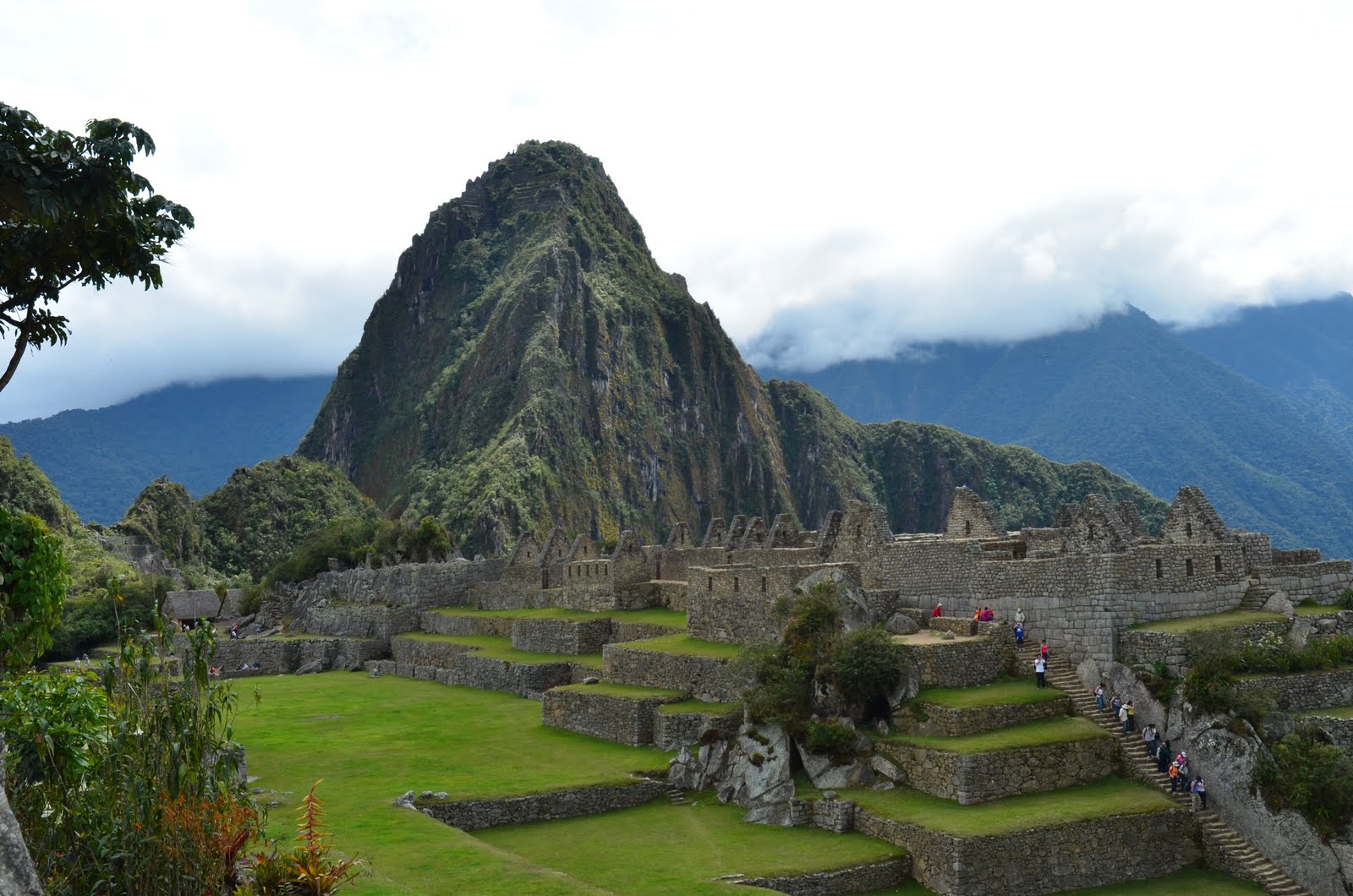
Although I am a time traveler (using my Mac), I sometimes go to places in the present time (using a plane ticket). I went to Machu Picchu (which is near Cusco, Peru) last month. It was very fun and interesting, and I plan to go back in past times (around 1400 A.D.) to learn more and see if all the theories are true. Meanwhile, I would like to share with you some of the things I saw and learned.

Me at Machu Picchu with Huayna Picchu in Background

The Incas built many temples, towns and homes on the sides of mountains. On most mountains the Incas built terraces that are like giant steps. The purpose of the terraces is for a flat farm area to grow crops.


Terraces

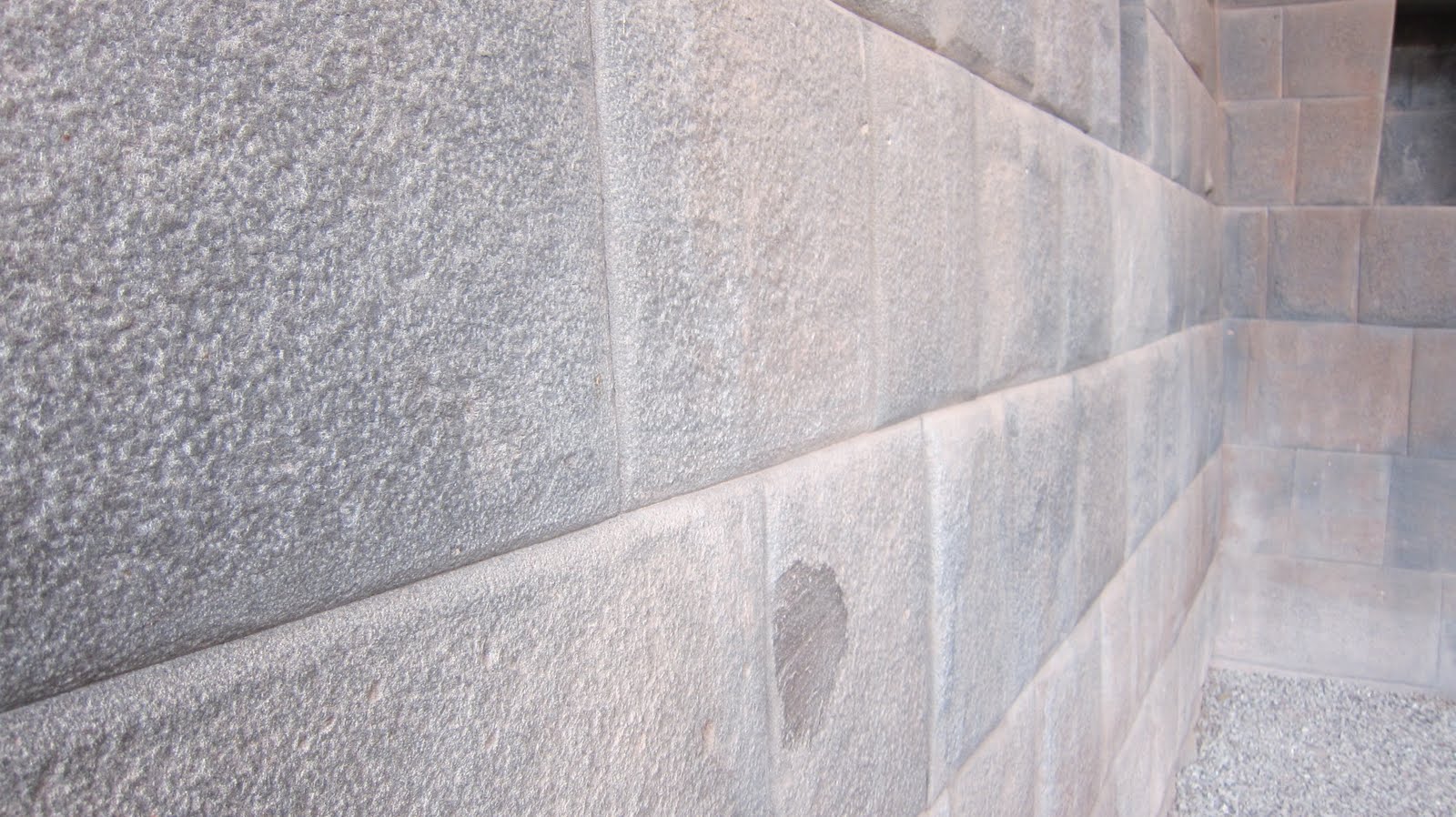
A strange thing about the Incas is that in just 200 years they built tons of temples and towns that would take a long time to make! It seems like long time, but for the work that they did it is not at all. The work they did was amazing. They stacked rocks on top of each other so tight you cannot insert a piece of paper in between them! The rocks they stacked also could weigh up to fifty tons and they moved them miles over mountains and rocky terrain!

The Tightness of the Rocks

The Incas also carved in the rocks so that on a certain day the sun would shine through the carving and cast a shadow to make a particular shape to occur on specific days. On December 22, when the sun was directly above Machu Picchu (noon) there would be no shadows casted. On June 21, a circular shape shadow would occur. They used those dates because December 22 was the time when the sun was in the direct middle of the sky and June 21 because that was when the sun was lowest in the sky. Perhaps they carved these to mark the start of a planting season.

Machu Picchu was the most important temple because it was hidden to the Spanish therefore getting its nickname the Lost City. The Spaniards couldn’t destroy it because it was hidden in the backside of a mountain in a very remote location, far from other temples and villages. Machu Picchu is called the Lost City because the jungle had literally swallowed it by the time that Yale explorer Hiram Bingham III rediscovered it in 1911. When the overgrown vegetation was removed, the complex of ruins was revealed.

Because the Incas were acclimated (used to the height) they would run into the mountains with ease if they needed to retreat, leaving the attackers breathless.

The Incas also believed there were three steps to the world. The under world represented a snake, the puma signified ground level and the condor meant the air or heaven.

Fountain with Three Steps

Incas did not collect and display gold because they thought it was valuable; they only used it because they thought it was the sun god in physical form. But the Spanish on the other hand were the opposite. They took the gold because it was valuable and didn’t respect the spiritual importance.

The Incan cross is a very meaningful symbol. The Inca cross has twelve steps representing the twelve months. The cross also represents the steps of life that the Incan culture believed in. The bottom right corner signified the underworld where you are dead from a life before and being born again. The right upper corner represented growing older. The upper left hand corner signified dying and the lower left corner represented being buried. This supports one of the reasons the Incas believed in resurrection.

Incan Cross

I really enjoyed visiting Machu Picchu. I recommend climbing to the top of Huayna Picchu, which is an 8,924 foot, two hour climb to the very top. The summit of Huayna Picchu has a great view of Machu Picchu. If you have any questions about my trip, please leave a comment and I will be happy to answer them. Meanwhile, here are some more pictures that I took for you to enjoy:

The View of Machu Picchu from the Summit of Huayna Picchu
Stone Condor
Temple Where Incas Worshipped Their Sun God
Huayna Picchu

By: Ace Wells

Tuesday, August 30, 2011

Book Review by Adele: The Red Pyramid

The Red Pyramid by Rick Riordan is an amazing 528-page fantasy novel about Carter and Sadie Kane’s adventures. It is the first in a series called The Kane Chronicles. Published by Disney Hyperion on May 4, 2010, The Red Pyramid has been a number one New York Times bestseller and was named the School Library Journal Best Book of 2010. This book is based on Egyptian mythology, so there are some historical and fantasy aspects to the novel. The story takes place in different places; a few important ones are Cairo, New York, Phoenix, and London. At the beginning of each chapter, it says who tells the story, followed by their ancient Egyptian symbol.


The only two narrators are Carter and Sadie. Carter and Sadie are brother and sister, fourteen and twelve respectively. They are both leading characters, but Carter seems to narrate more often. The other main characters are, Amos, their uncle; Bast, the goddess of cats; Desjardins, the Chief Lector (eventually); Set, the god of fire; Zia, a student at the house of life; Horus, brother and conqueror of Set; Isis, sister of Set; Julius/ Osiris, the god of the dead; and Ruby Kane, Carter and Sadie’s mother.


This story is about Carter and Sadie’s adventures across the globe as they join forces to solve a mystery that has them uncovering ancient family secrets. Along the way, Carter and Sadie learn that they are descendants of ancient Egyptian pharaohs. They discover that Carter was a host of Horus. Sadie finds out that she was a host of Isis. Julius, their father, becomes the host to Osiris, the god of the dead. This happens when Julius tries to summon Osiris using the Rosetta Stone in order to bring back Ruby, his wife, who died when Carter was eight and Sadie was six. Eventually Carter and Sadie reach Set’s red pyramid and they find out a surprising family secret. That secret is an important development that helps Carter and Sadie face their foes and save the world.


My favorite character is Bast, the goddess of cats, because she has leadership qualities, even though she is a sidekick of Ra, the god of the sun. Sadie is a strong character who does as she likes, not as her brother Carter (who is like my brother Ace!☺) would like. I particularly disliked Desjardins because he did not want to hear Carter's and Sadie’s ideas just because he argued with their father a lot. Sadie was often frustrated when her good ideas were not always heard. I think a lot of people her age feel like that. The author told the story as though it had been actually recorded word for word on tape and then transcribed into a book. This made the adventure seem realistic. The author gave the main characters a good sense of humor, which balanced the serious themes, making the story even more likable.


My overall impression of the book was that it would be a very positive book to read for fun and for school. I would recommend this book to people who like suspense books and mythology themes. It is not for people who like fairy tales and happy endings (although it has a kind of happy ending). I think that readers aged eight and over of both genders would enjoy reading The Red Pyramid.


By Adele Wells

Thursday, August 18, 2011

Hello!

Welcome to our blog! As you can see, this is our first post as we travel through time. My name is Adele. My brother's name is Ace. We made an amazing discovery! Our computers can take us through time. We will also use our computers to tell you about it. Go Mac! Today I am typing. Let's begin.

The purpose of this blog is to share with you about our travels through time. We plan to start with traveling to many ancient civilizations, including Mesopotamia, Egypt, Greece, and Rome.  Our computers can travel to any time or place, so be prepared to join us as we enjoy many sights and meet interesting people.

I enjoy filming, so I am particularly interested in getting to film the people of each time period.  Ace is interested in seeing the ruins. He is also curious about how the ancient people created them without modern technology and resources.

I am also very excited to meet Hatshepsut, the first of the woman pharaohs. Hatshepsut was important because she proved to the world that women could handle leadership just as well as men.  Ace would like to meet some of the Egyptian carpenters because they provided tools to help make the pyramids. He would like to learn how the carpenters broke the rocks into perfect squares to put on top of each other, and how the workers transported the blocks to the tops of the pyramids.

During our travels we will be filming (mostly me!) :), keeping travel journals, doing arts and crafts, writing book reviews, and other exciting projects. Stay tuned to learn how we discovered the time machine and how we use it!

We hope you will enjoy our new blog! 

                                              ~Ace and Adele